If you just want a straight answer without overthinking it, here it is:
For 2 weeks, most people end up spending around $800–1,200 total per person, and out of that, you’ll realistically use $300–500 in cash.
That’s the honest range. Not the “you can live on $10 a day” myth, and not the “you need thousands” exaggeration either.
From my experience (and what a lot of travelers on Reddit say), people who bring too much cash end up:
And people who bring too little:
So the sweet spot is somewhere in the middle. We’ll break that down next.
You’ll pay for big stuff like hotels, tours, and beach clubs by card without any issues. But daily life. Food at local spots, short rides, small fees. That’s still very much cash.
The biggest mistake I see (and yeah, people talk about this a lot online) is going to extremes. Either bringing way too much cash and stressing about losing it, or trying to go fully cashless and getting annoyed every single day.
The sweet spot is simple.
Bring some cash, use your card smartly, and adjust as you go.
That’s how Bali actually works.

Let’s get more specific, because this is where most articles either sugarcoat things or go completely unrealistic.
Here’s what you’ll actually spend per day in Bali in 2026, based on real traveler patterns and current prices.
This is the “I’m watching my money, but still enjoying Bali” style.
Typical daily spend:
✍️ Reality check.
You can go cheaper, but most people don’t stick to ultra-budget for 2 full weeks. You’ll still want a nice brunch or a smoothie bowl at some point. Bali can be cheap or expensive, but in most cases there’s a clear answer to whether Bali is expensive in 2026 or not.
This is where most travelers fall.
Typical daily spend:
✍️ This is the “comfortable Bali” experience.
You’re not counting every dollar, but you’re also not going crazy.
Think trendy cafés, beach clubs, nicer dinners.
Typical daily spend:
✍️ This adds up fast.
Especially in places like Canggu or Seminyak where prices are noticeably higher.
This is the part most guides don’t tell you.
From what I’ve seen (and honestly experienced myself), people usually underestimate:


This is where Bali can catch people off guard.
You might expect everything to be card-friendly by now, but in reality, cash is still essential for a lot of everyday situations.
Here’s where you’ll almost definitely need it.
If you’re eating at authentic local spots (which you should try once at least), many of them:
A simple nasi goreng at a warung might cost $2–3, and it’s almost always cash only.
Renting a scooter is usually:
Plus, you’ll constantly pay small parking fees:
It sounds tiny, but it happens quite often.
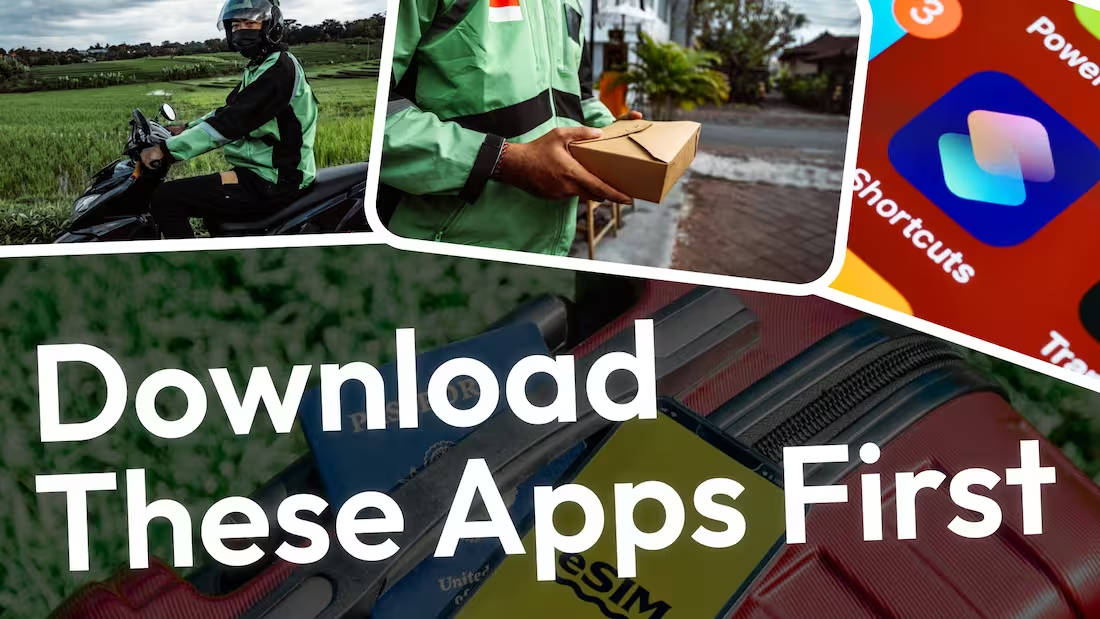
Apps like Grab and Gojek do accept cards.
But in reality:
Whether you take a taxi or rent a scooter, these must-have apps for Bali will definitely come in handy.
Visiting temples is one of the highlights of Bali.
Places like Uluwatu Temple or Tirta Empul usually require:
All paid in cash.
This is the “death by a thousand small payments” category:
Even if you plan to pay mostly by card, you’ll still end up using cash multiple times a day.
From what I’ve seen (and what people constantly mention on Reddit), the biggest mistake is:
👉 assuming Bali is cashless. It’s not.
How much cash you need depends a lot on your overall budget. If you’re still planning that, check out Is $1000 enough for a week in Bali?

Now the good news.
Bali isn’t stuck in the past. In fact, in many places, paying by card is not just possible, it’s actually the better option.
Almost all:
accept cards without any issue.
In areas like Seminyak, Canggu, and Ubud, it’s completely standard.
✨ In fact, paying by card here is safer than carrying large amounts of cash.
Also, where you stay can change how often you’ll need cash vs card. I explain the differences between areas in What is the nicest place to stay in Bali in 2026?
Most mid-range and higher-end places accept cards, including:
Places like Finns Beach Club or Potato Head Beach Club are fully card-friendly.
✨ If you’re spending $30–50+, just use your card. No reason not to.
Booking:
You’ll usually pay:
Cash is sometimes accepted, but not necessary.
Chains like:
accept cards for everyday purchases.
✨ Though for very small amounts, cash is still quicker.
This is where things get slightly annoying.
Bali is basically half cash, half card.
If you try to go fully cashless, it gets frustrating.
If you go full cash, it gets stressful.
Balance wins.

This is where most people get confused.
They ask:
👉 “How much cash should I bring?”
But the better question is:
🏝 “How much money do I actually need for 2 weeks - and how much of that should be cash?”
Let’s break it down simply.
Here’s what most travelers actually spend in total (cash + card combined):
This includes:
👉 Reality check.
Most people land somewhere in the $1,000–1,200 range / per person for 2 weeks.
We also cover everything you need right after landing in Bali in our complete airport arrival guide, including SIM setup, transport, and cash tips.
Now the important part.
You do not need all of this in cash.
A realistic split looks like this:
So in real numbers:
Let’s make it real.
If your total 2-week budget is $1,200:
You:
👉 Simple, balanced, and how most experienced travelers actually do it.
I also wrote an article about who would find 3 weeks in Bali just right and who would find it too long.
From everything I’ve seen (and yes, from Reddit too), people usually fall into two extremes:
The sweet spot is obvious:
👉 Have enough cash to feel comfortable. But rely on your card for the bigger stuff.
That’s how Bali actually works.

✅ Bali is not fully cashless. You will need cash daily for small expenses
✅ A realistic cash range for 2 weeks is $400–600 per person, depending on your travel style
✅ Most travelers spend $1,000–1,200 total for 2 weeks without luxury hotels
✅ Local warungs, small shops, and temples are mostly cash-only
✅ Cards are widely accepted in hotels, restaurants, and beach clubs
✅ The best strategy is to split spending between cash and card
🔶 Carrying too much cash can create unnecessary stress and risk
🔶 Relying only on cards can be frustrating in everyday situations
🔶 ATM fees and bad exchange rates can quietly increase your costs
🔶 Tourist areas like Canggu and Seminyak can push your budget higher than expected
We’ve created the ultimate Bali guide for first-time visitors — based on real experience, not guesswork.