
What surprised me most is how quickly Bali becomes easier once you have the right setup on your phone. Ordering late-night nasi goreng, finding a driver in Ubud, booking a villa in Canggu, or reserving a trendy restaurant suddenly becomes almost effortless.
And honestly, after reading Reddit travel threads before my first Bali trip, I noticed the same pattern over and over. People rarely regret downloading the right apps early. They regret discovering them too late.
If you only install a few apps before going to Bali, make these your priority
And honestly, that’s already enough for most travelers. A lot of “must-have Bali apps” articles overcomplicate things, but realistically these apps cover almost everything tourists actually need on the island.

Accommodation apps become surprisingly important in Bali because the island has an absurd amount of options 🌴 And honestly, this is both good and bad.
Agoda is incredibly popular in Southeast Asia, and Bali is honestly one of the places where it shines most.
A lot of travelers notice:
Especially for:
…Agoda often performs very well.
Many Reddit travelers mention they compare:
…and Agoda frequently wins on price in Bali specifically.
Booking.com remains one of the safest and easiest platforms for Bali accommodation.
Its biggest advantages are usually:
This matters a lot in Bali because photos can sometimes look very different from reality 😅
Read about the nicest places to stay in Bali to find the best match for your travel style.
Airbnb is still huge in Bali. And honestly, Bali is one of the few places where Airbnb photos sometimes look even better in real life 🌴
But there are also common complaints travelers mention:
This is why reviews matter more in Bali than almost anywhere else.
One honest tip:
If dozens of reviews mention:
…believe them 😄

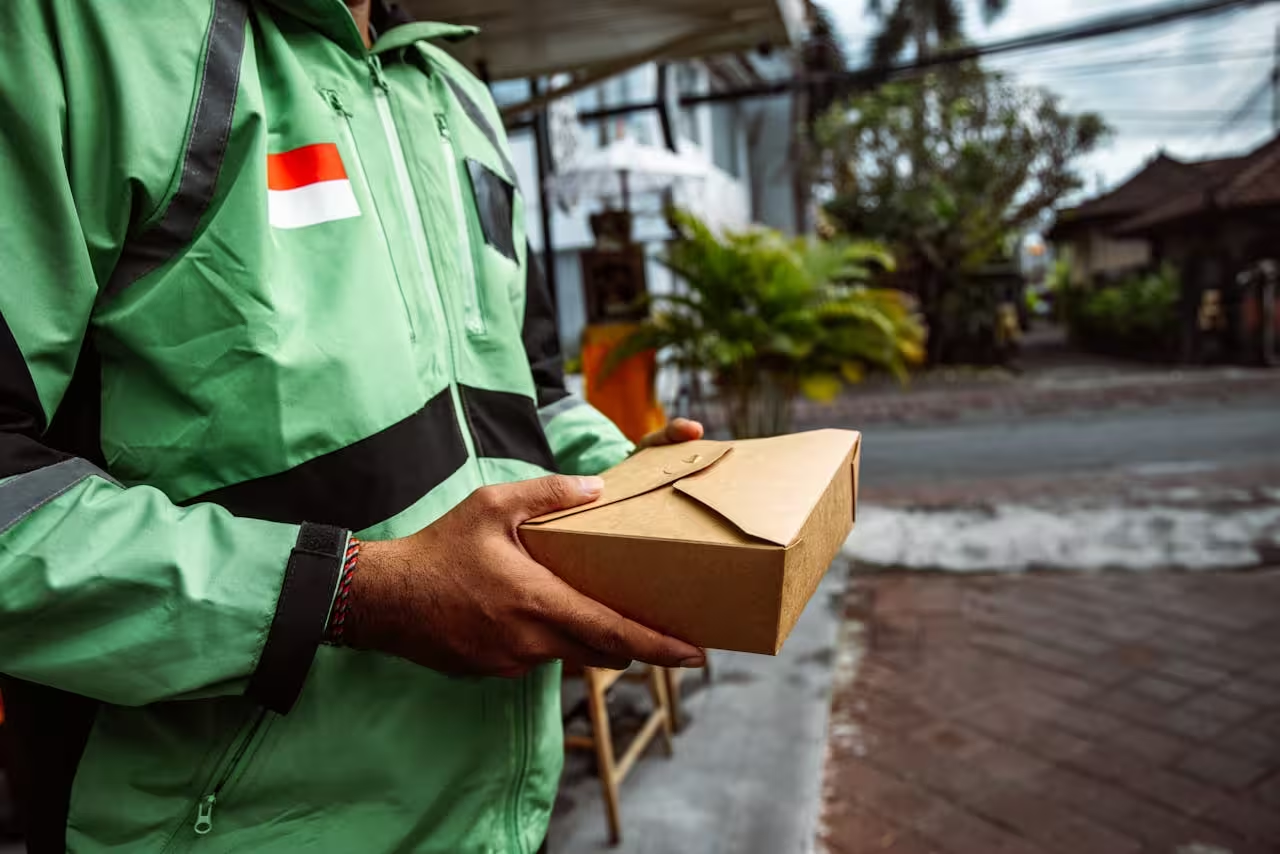
One thing many people don’t expect before coming to Bali is how massive food delivery culture is here 🍜
Honestly, after a few days, it becomes dangerously convenient 😄
You finish surfing, come back to your villa exhausted, open an app, and 25 minutes later someone arrives with smoothie bowls, nasi goreng, sushi, coffee, or even groceries. In busy areas like Canggu, Seminyak, and Ubud, locals, expats, and tourists use delivery apps constantly.
And surprisingly, delivery in Bali is often cheap enough that many travelers use it more than they expected.
GoFood is built into Gojek and honestly becomes one of the most addictive apps on the island.
You can order:
What makes GoFood especially useful is that Bali traffic becomes someone else’s problem 😅
Grab also has its own delivery system called GrabFood.
And honestly, many travelers simply compare:
…before ordering.
Sometimes one app offers:
This is why experienced Bali travelers often keep both apps installed.
This sounds obvious, but Google Maps becomes incredibly important for food in Bali.
Why?
Because Bali is full of:
Reviews help a lot.
Especially in:
…where new cafés appear constantly.
One thing many travelers learn quickly is that:
⭐ 4.8 rating in Bali usually means something
⭐ 4.2 can already be questionable in tourist zones
Photos from recent visitors also matter because some places change quality very fast.
Even if you’re careful with food and water in Bali, it’s worth knowing about Bali Belly in advance.
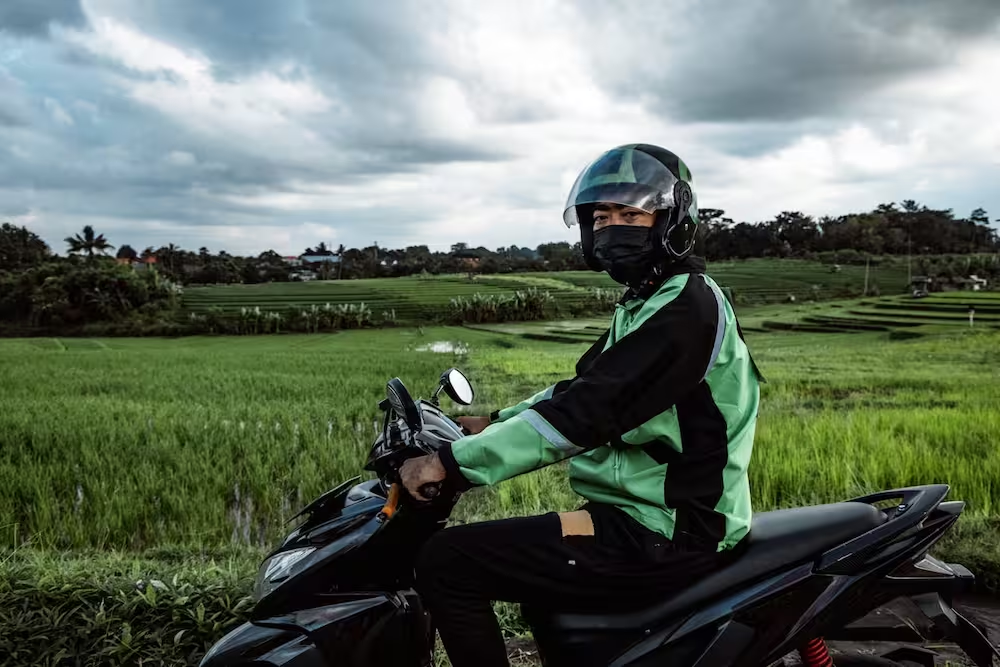
If there’s one thing that surprises first-time visitors to Bali, it’s how much daily life revolves around transport apps 🛵
Unlike many countries where you simply walk outside and grab a taxi, Bali works differently. Distances can look short on the map but take forever because of traffic, narrow roads, and chaotic shortcuts. After a few days, most travelers stop trying to negotiate with local taxi drivers and simply open an app instead.
Gojek is honestly one of the main reasons Bali feels convenient today.
You can use it for:
But the real game changer is GoRide. These are scooter taxis that can get through Bali traffic dramatically faster than cars.
For example:
…can easily happen in Canggu during sunset hours 😅
A lot of Reddit travelers say they initially felt nervous about using scooter taxis, but later ended up using them multiple times per day because they’re cheap, fast, and incredibly practical.
Grab works very similarly and many travelers install both apps because prices constantly change between them.
Sometimes:
Grab is especially popular for:
Google Maps becomes essential surprisingly quickly in Bali.
Not only for directions, but also for:
One thing I’d strongly recommend is downloading offline maps before arriving. Bali internet is usually decent, but some areas around mountains, waterfalls, or smaller islands can still lose signal.
Also, Bali roads sometimes look “close” on the map while actually taking much longer because of:
Google Maps helps, but in Bali, travel time estimates can still be wildly optimistic 😄
If you plan to visit:
…you’ll probably end up booking fast boats online instead of through random street sellers.
Apps and platforms like:
usually make the process less stressful because schedules, reviews, and prices are more transparent.
Especially during high season, booking last minute at the harbor can become chaotic very quickly.
If you want a full step-by-step guide on what to do immediately after landing in Bali Airport, check out our detailed Bali arrival guide.
The people who struggle most in Bali are usually the ones trying to avoid using local apps altogether.
Meanwhile, travelers who quickly set up:
…normally adapt much faster and spend less money during the trip.
Especially in places like Canggu and Ubud, these apps almost become part of daily life within 48 hours.

A lot of travelers arrive in Bali thinking they’ll organize tours locally after arrival.
And yes, you can.
But apps like:
often make things dramatically easier.
They’re commonly used for:
The biggest advantage is transparency.
Instead of:
…you can quickly compare ratings, inclusions, pickup locations, and cancellation rules.
This is especially useful for first-time Bali visitors.
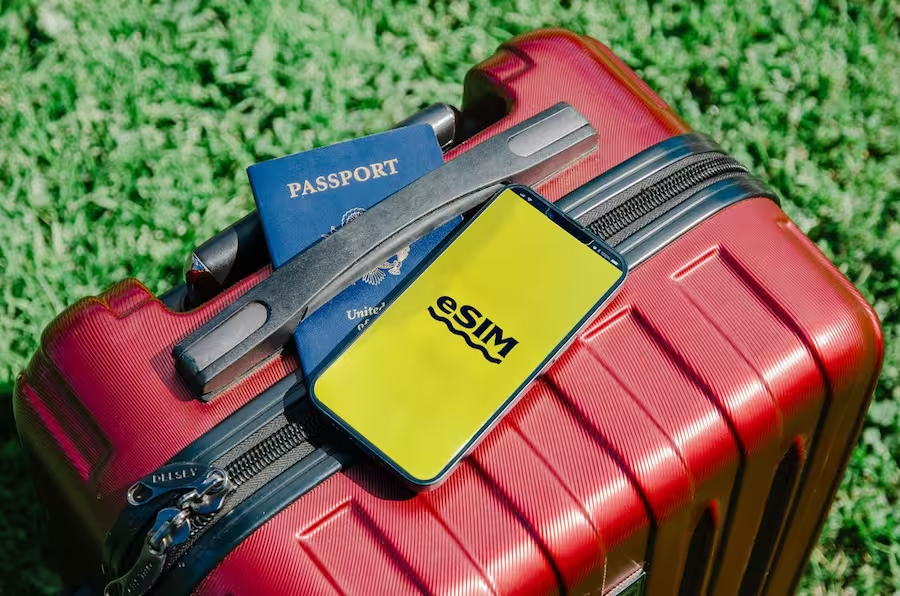
Getting mobile internet quickly after landing in Bali makes a massive difference.
Why? Because almost everything depends on connectivity:
Instead of:
…many travelers now simply install an eSIM before arrival.
Apps like:
have become extremely popular for Bali travel. Especially for short trips, they’re often much more convenient.
This sounds funny, but WhatsApp becomes one of the most important “travel apps” in Bali.
People use it for:
Sometimes businesses barely answer emails at all but respond instantly on WhatsApp.
If you arrive without it, Bali can honestly feel strangely inconvenient.

This is the part of Bali travel that most people only figure out after a few days on the island 🌴
The basics like transport and food delivery are obvious. But there’s a second layer of apps that quietly make everything easier, especially if you stay longer or move around a lot.
Bali is not just sightseeing. A lot of experiences happen through communities and apps 🌴
NomadTable is especially useful if you’re traveling solo or working remotely in Bali and want to meet other travelers, join plans, or connect with people in the same area instead of staying isolated in cafés or coworking spaces.
If you’re anywhere near Uluwatu, Canggu, or Bingin, checking conditions stops being optional.
Most used app:
These are heavily used by surfers, but also helpful for planning beach clubs, boat trips, and Nusa Penida crossings.

✅ Gojek is one of the most essential apps in Bali for scooter rides, food delivery, groceries, and everyday transport, and most travelers end up using it daily
✅ Grab is a strong alternative to Gojek and helps compare prices, availability, and ride options across Bali’s main tourist areas
✅ Google Maps is critical in Bali for navigation, café discovery, traffic checking, and avoiding misleading travel times
✅ Agoda often provides competitive prices for Bali villas and hotels, especially for last-minute deals
✅ Booking.com is widely used for flexible accommodation bookings and reliable hotel reviews across Bali
✅ Airbnb remains popular for private villas and long stays, especially in areas like Canggu and Ubud.
✅ GetYourGuide and Klook are commonly used to book tours, island trips, and activities without negotiating locally
🔶 Relying only on booking apps can lead to missing better local deals or hidden gems not listed online
🔶 Some accommodation listings may be misleading, especially regarding location noise or access roads, so check reviews on google maps before booking
We’ve created the ultimate Bali guide for first-time visitors — based on real experience, not guesswork.