
Listen, Bali is easy to get around… until you actually arrive there 😅
Before my first trip, I imagined peaceful island roads, quick taxi rides, and casually walking between cafés and beaches. The reality felt completely different. Traffic can get surprisingly intense, sidewalks often disappear out of nowhere, and a 10-minute ride on Google Maps can suddenly become 40 minutes during sunset hours.
At the same time, Bali is still one of the easiest places in Southeast Asia to move around once you understand how locals and experienced travelers actually do it.
If you want the short version. Most people in Bali either rent a scooter, use Gojek/Grab, or hire a private driver depending on their budget and comfort level.
Scooters are the fastest and cheapest way to get around Bali, especially in busy areas like Canggu and Ubud, but traffic and road conditions can feel overwhelming if you’ve never ridden in Southeast Asia before. Grab and Gojek are surprisingly affordable and work well for short trips, although some tourist areas still have restrictions on ride-hailing apps. For longer day trips, waterfalls, or temple tours, hiring a private driver is often the least stressful option and usually costs less than many tourists expect.
One thing that surprised me most. Bali is not very walkable in many areas. Sidewalks can disappear suddenly, traffic gets heavy, and the heat makes longer walks exhausting pretty quickly.
If I had to give one honest recommendation. First-time visitors who are not confident on scooters are usually better off using ride apps and private drivers instead of forcing themselves to ride in Bali traffic.
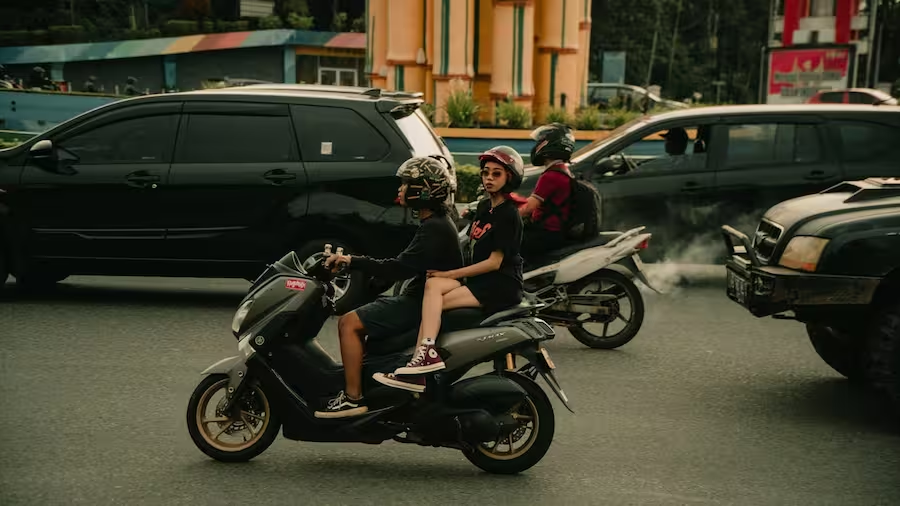
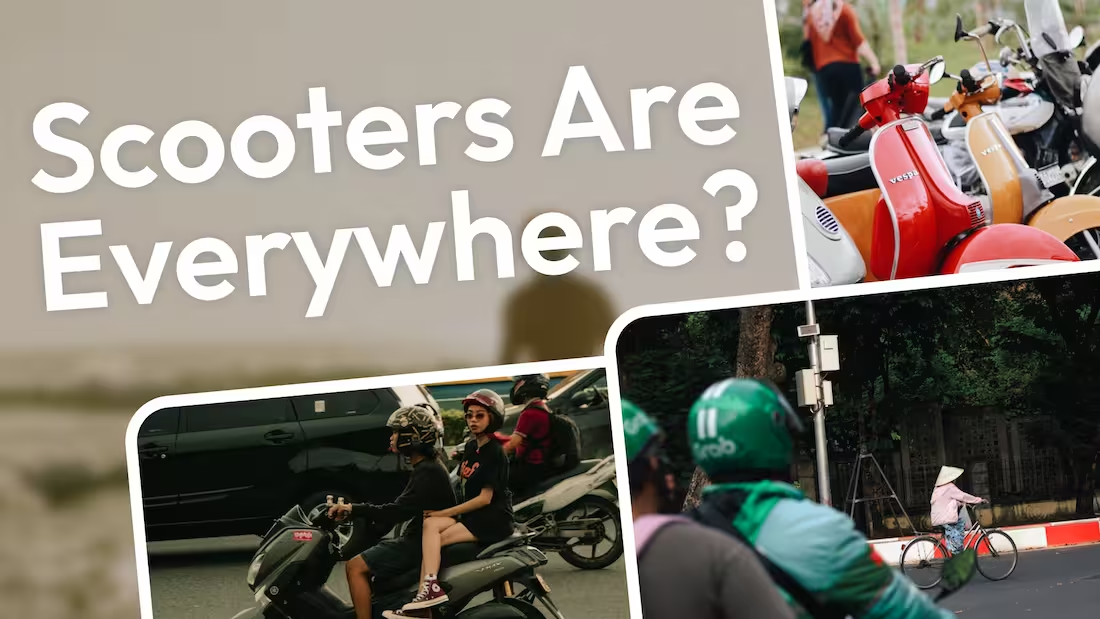
If you spend more than a few hours in Bali, you’ll quickly notice one thing 🛵
Almost everyone seems to be riding a scooter.
Honestly, I understand why. Scooters are easily the fastest way to move around places like Canggu, Seminyak, and Ubud, especially during peak traffic hours when cars barely move. In some areas, scooters can cut travel time in half compared to a car.
The first time I rented one in Bali, it felt intimidating for about 20 minutes… and then suddenly it made perfect sense. Traffic there looks chaotic at first, but it’s strangely predictable once you adapt to the local flow.
Still, I wouldn’t blindly recommend scooters to everyone.
Prices vary depending on:
Typical prices I personally saw:
Scooter TypeAverage Daily PriceBasic scooter$4–8/dayNMAX / larger scooter$8–15/dayMonthly rental$60–150/month
Most rental shops deliver the scooter directly to your villa or hotel, which honestly feels incredibly convenient after a long flight.
This is where expectations and reality separate 😅
Things that surprised me:
Reddit is full of stories from travelers who thought:
“I’ve driven scooters before, how hard can Bali be?”
…and then regretted it after one stressful ride in Canggu traffic.
Personally, I think Bali is manageable for:
✅ confident riders
✅ people comfortable in busy traffic
✅ travelers staying longer than a few days
But for nervous beginners, scooters can turn a relaxing trip into constant stress.
Technically. Yes.
Bali police occasionally stop tourists, especially in busy areas. Many travelers ride without the correct motorcycle permit, but that doesn’t mean it’s legal.
More importantly:
That’s the part many travel influencers conveniently skip mentioning.
The people enjoying scooters the most were usually:
Meanwhile, short-term tourists often seemed happier using Grab or private drivers instead of worrying about parking, navigation, and traffic.
One small thing I unexpectedly loved. Parking scooters in Bali is ridiculously easy compared to cars.
Scooter rental in Bali is easily the most popular transportation option because it’s cheap, flexible, and much faster in traffic-heavy areas like Canggu or Ubud. At the same time, driving a scooter in Bali can feel stressful for inexperienced riders due to chaotic traffic, narrow roads, and local driving habits.

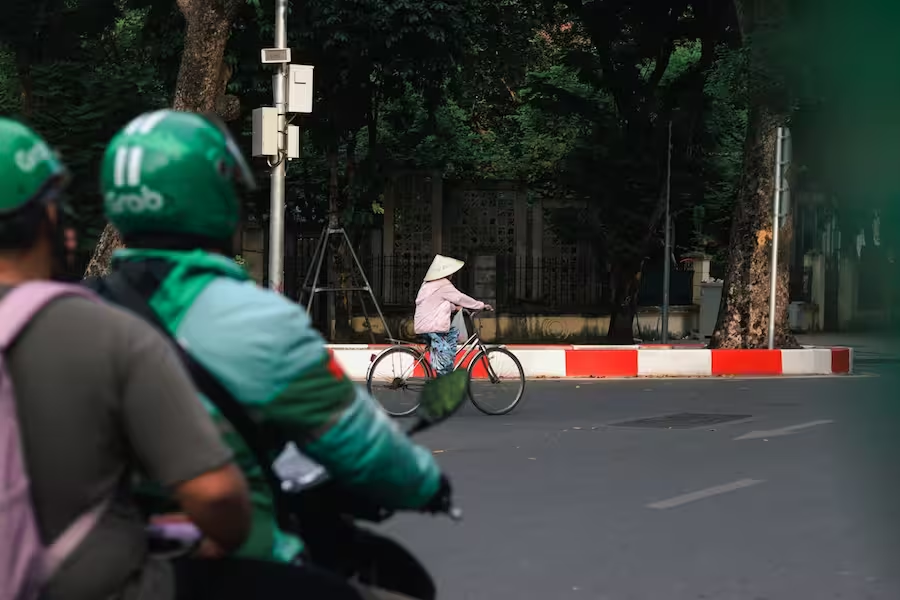
Before going to Bali, I honestly thought transportation apps there would work exactly like Uber in Europe or the US 📱
In reality, Grab and Gojek are incredibly useful… but Bali has a few quirks that surprise almost every first-time visitor.
For many travelers, especially those who don’t want to ride scooters, these apps become the main way to get around Bali comfortably and cheaply.
And honestly? They work much better than I expected.
If you’ve never used them before:
Both apps offer:
In Bali, scooter taxis are extremely popular because they move through traffic much faster than cars.
There are other apps you need for living in Bali - find out about them.
This was one of the biggest surprises for me 💸
Typical prices I personally saw:
Compared to Western countries, Bali transportation through apps feels surprisingly affordable.
Sometimes I’d open the app expecting a “tourist price”… and the ride would cost less than my coffee.
I kept seeing people online say:
“Always install both Grab and Gojek.”
That advice turned out to be extremely useful.
Sometimes: one app has more drivers, one app is cheaper, one app works better in certain areas.
Locals switch between both constantly.
Grab and Gojek in Bali are among the easiest and cheapest ways for tourists to get around the island without renting a scooter. These ride-hailing apps work similarly to Uber and offer both scooter taxis and car rides at surprisingly affordable prices.

At first, hiring a private driver in Bali sounded unnecessary to me.
I assumed it would be expensive, overly touristy, or something only luxury travelers do.
I was completely wrong.
After a few days of dealing with traffic, long distances, and confusing pickup points, I finally booked a private driver for a full-day trip… and honestly, it became one of the most relaxing parts of my Bali experience.
For many travelers, especially couples, families, or groups, private drivers are actually one of the best transportation options on the island.
Most drivers offer: half-day trips, full-day tours, airport transfers, custom itineraries.
A typical full-day setup looks like this:
The surprising part. Drivers in Bali often act almost like informal tour guides.
Many will: recommend restaurants, suggest hidden waterfalls, even explain local customs.
Some of the best places I visited were actually recommendations from drivers.
Prices depend on: distance, area, trip duration, negotiation skills.
But generally, Bali private drivers are much cheaper than many tourists expect.
Typical ranges:
Airport transfer ~$10–25, Half-day driver ~$25–40, Full-day driver ~$40–70.
If you split costs between 2–4 people, it can become surprisingly affordable.
That’s one reason so many travelers eventually stop using individual taxis for sightseeing days.
Read also about how expensive Bali is in 2026.
Mostly yes… but there are a few things worth knowing.
These are the most trusted metered taxis in Bali.
Many travelers specifically recommend them because:
✅ meters are reliable
✅ pricing feels transparent
✅ drivers are easy to find
But there’s also a funny Bali problem 😅
Some unofficial taxis imitate Blue Bird branding very closely.
That confuses tourists constantly.
Not every driver experience is amazing.
Sometimes:
This is why many travelers book through hotel recommendations or use WhatsApp referrals.
Reddit and travel groups are full of repeat driver recommendations for this exact reason.
Anyway, hiring a private driver in Bali is one of the easiest and most comfortable ways to explore the island, especially for day trips and sightseeing. Bali private drivers are often more affordable than tourists expect and can double as local guides during the trip. For couples, families, and first-time visitors, hiring a Bali driver can often provide the smoothest overall transportation experience.

This was probably the biggest surprise of my entire Bali trip 🚶☀️
Before visiting, I imagined Bali as one of those places where you casually walk between cafés, beaches, shops, and restaurants all day. In reality, walking in Bali can become exhausting surprisingly fast.
And honestly, this catches many first-time visitors completely off guard.
In some areas, sidewalks exist… until they suddenly don’t 😅
You’ll often see: broken pavement, scooters parked on sidewalks, random holes, uneven paths, sections where pedestrians walk directly next to traffic.
A short 15-minute walk on Google Maps can sometimes feel much longer because you constantly need to:
This is especially noticeable in: Canggu, Seminyak, busy parts of Ubud.
Even if you normally enjoy walking while traveling, Bali’s climate changes the experience quickly.
The combination of heat, humidity, traffic & sun exposure can make simple walks surprisingly draining.
I remember planning to “walk everywhere” during one afternoon in Seminyak… and after 20 minutes I immediately opened Grab instead.
A lot of Reddit travelers describe the exact same thing:
“Distances in Bali feel longer than they look online.”
That turned out to be very accurate.
Not all of Bali feels equally difficult for pedestrians.
✅ central Ubud
✅ parts of Seminyak
✅ tourist streets near cafés/beach clubs
❌ Canggu shortcuts
❌ rural roads
❌ areas without lighting at night
In quieter areas, walking can actually feel peaceful and beautiful. But in high-traffic zones, it often becomes frustrating fairly quickly.
However, not all neighborhoods are created equal, some are more comfortable for walking, while others are not. Read about the most comfortable neighborhoods in Bali.
Despite the challenges, I still enjoyed walking in Bali in certain situations:
The key is not expecting Bali to function like a highly walkable European city. Once I adjusted my expectations, transportation became much less frustrating overall.
Walking in Bali is often more difficult than first-time visitors expect because sidewalks can be inconsistent, traffic is heavy, and the tropical climate quickly becomes exhausting. While some tourist areas in Bali remain reasonably walkable, many roads are not designed comfortably for pedestrians.

After spending time in Bali and trying different ways of getting around, I honestly think there’s no “perfect” transportation option.
The best choice completely depends on your confidence level, budget, and travel style.
That said, if a friend asked me how I’d personally handle transportation in Bali today, this is exactly what I’d recommend.
I probably would NOT rent a scooter immediately.
I know scooter content dominates Instagram and YouTube, but Bali traffic feels very different once you experience it in real life. Many first-time visitors underestimate:
Instead, I’d personally:
✅ use Grab/Gojek for daily rides
✅ hire private drivers for sightseeing days
✅ only consider scooters later if comfortable
This removes a huge amount of stress from the trip.
This changes things significantly 🛵
For digital nomads or long-term travelers, scooters start making much more sense because:
Most long-term Bali visitors I met eventually switched to scooters because constantly ordering rides became less convenient over time.
Still, the people happiest on scooters were usually already comfortable riders before arriving in Bali.
I also have some thoughts on when a 3-week trip to Bali is just right and when it's too long.
Transportation in Bali frustrates many people during their first few days because expectations are usually wrong.
People expect: short distances, walkable streets, predictable traffic.
But Bali works differently.
Once you accept that transportation is simply part of the island experience, things start feeling much easier. In a strange way, even the chaotic traffic becomes part of Bali’s personality 🌅

✅ Scooters are the fastest and cheapest way to get around Bali, especially in busy areas like Canggu and Ubud, helping travelers bypass traffic jams.
✅ Ride-hailing apps like Grab and Gojek are widely available and extremely affordable for short trips.
✅ Private drivers are a comfortable and stress-free option for full-day tours, often doubling as informal local guides.
✅ Many travelers find private drivers surprisingly affordable, especially when splitting costs between groups.
✅ Certain areas like Ubud and Seminyak are partially walkable, offering enjoyable short-distance exploration.
✅ Scooters provide unmatched flexibility for long-term travelers and digital nomads staying in Bali.
✅ Combining scooters, ride apps, and private drivers offers the most balanced and efficient travel strategy across the island.
🔶 Traffic in Bali can be unpredictable, with 10-minute routes often turning into 40-minute trips during peak hours.
🔶 Scooter riding can feel overwhelming for beginners due to chaotic traffic flow and unfamiliar road behavior.
🔶 Walking is often difficult due to missing sidewalks, heat, and heavy traffic in many tourist areas.
🔶 Some taxi experiences or driver tours may include inconsistencies such as variable driving styles or commission-based stops.
We’ve created the ultimate Bali guide for first-time visitors — based on real experience, not guesswork.