
Listen… if I could answer “Is Bali expensive to eat out?” in one sentence, I probably would 😄
One person says:
“I ate amazing meals for a few dollars every day.”
Another says:
“Why was I spending more on brunch in Bali than back home?”
And weirdly enough… both people are telling the truth.
Because eating in Bali can either feel unbelievably cheap or surprisingly expensive depending on how you travel, where you eat, and how quickly you fall into the island’s café lifestyle.
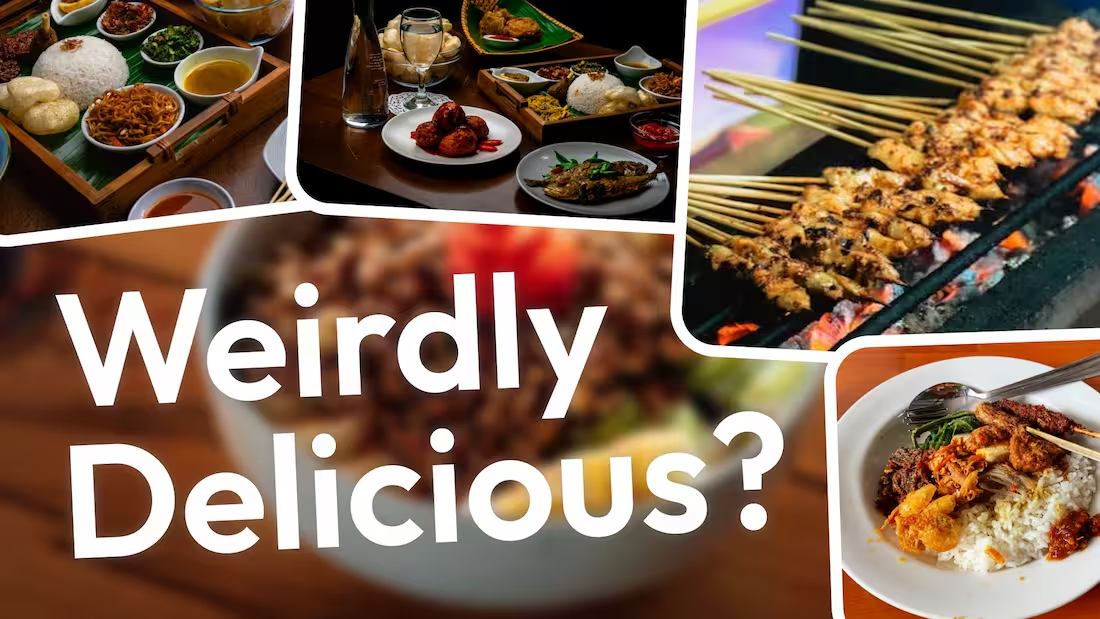
No — Bali is not generally expensive to eat out compared to the US, Europe, or Australia. You can still find delicious local meals for just a few dollars at small warungs 🍛
But here’s the catch.
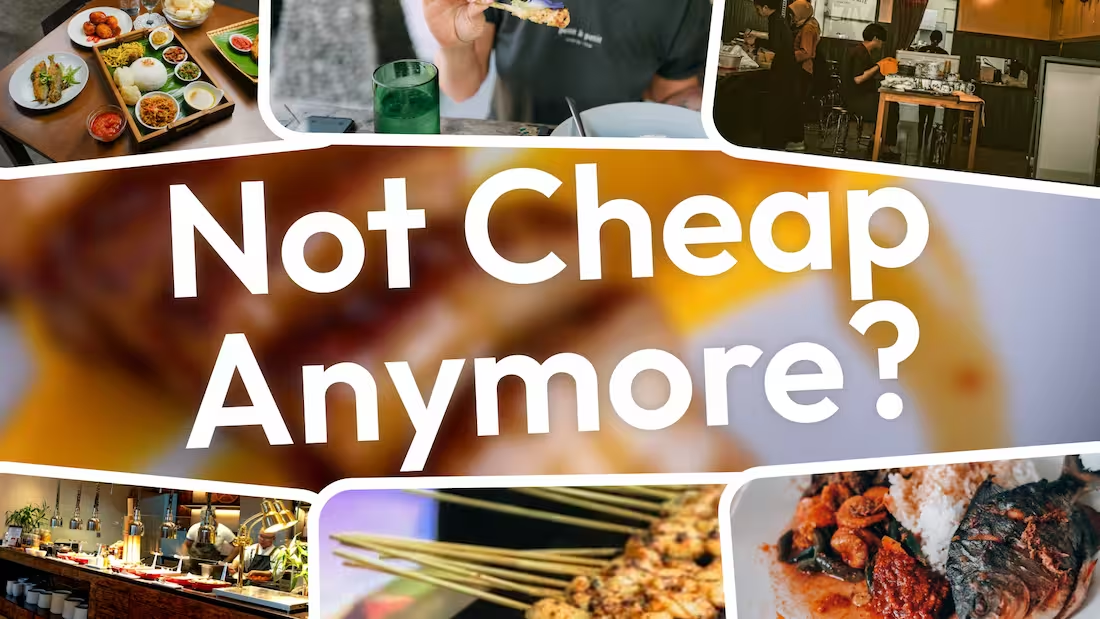
Bali also has a huge café and brunch culture now, especially in places like Canggu and Ubud, where prices can feel surprisingly close to Western countries. Smoothie bowls, specialty coffee, healthy brunches, and beach clubs add up fast.
So the honest answer is:
Overall, Bali food prices in 2026 depend less on the island itself… and more on the version of Bali you choose to experience.
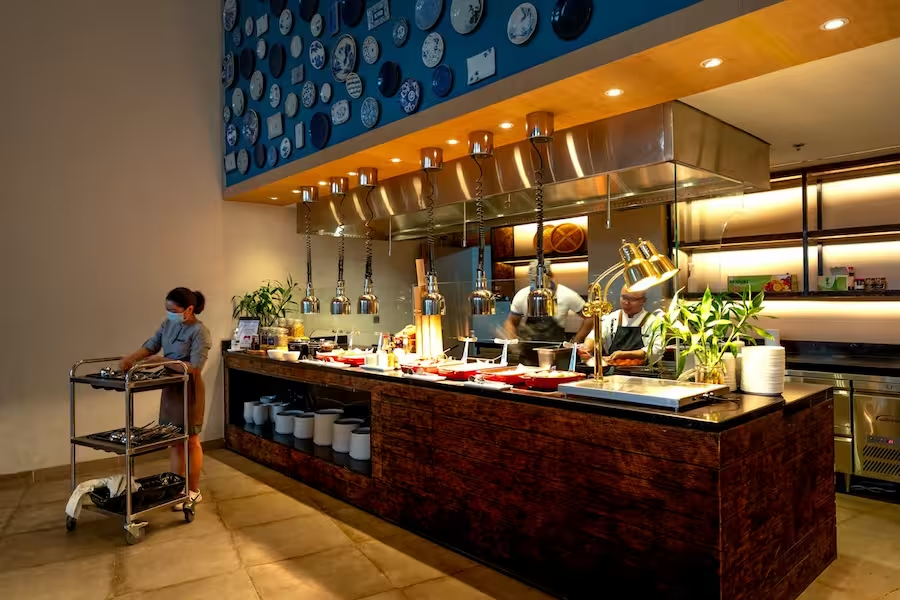
Bali can be extremely cheap for food… or weirdly expensive for Southeast Asia. There’s honestly not much middle ground sometimes 😅
A lot depends on:
If you eat mostly at local warungs, Bali is absolutely affordable.
Typical local meals usually cost:
And honestly, this is where many travelers end up having their favorite meals anyway.
You’ll usually get:
For the price of a single coffee in the US or Europe 😄
A lot of tourists are surprised by how filling and flavorful local food can be for such little money.
Now let’s talk about the other side of Bali.
Modern cafés in places like Canggu, Seminyak, and Ubud can feel surprisingly Western in price.
Typical café meals:
And suddenly:
This is usually the moment when travelers realize:
“Oh… this is how people accidentally spend a lot in Bali.” 😅
Mid-range restaurants in Bali are usually still cheaper than Western countries, but not dramatically cheaper anymore.
You can have a launch at a good restaurant for 15-20$ per person, but if choose to go to a beach club next day you can easily spend 40-50$ there (be really careful about beach clubs, there are many places with reasonable prices, but always ask about it in advance).
Especially in tourist-heavy areas:
…can start feeling expensive surprisingly quickly.
Some beach clubs almost operate on “vacation pricing logic” rather than local Indonesian pricing. And people often underestimate how much eating socially in Bali increases spending.
From what most travelers describe online:
That’s why discussions about Bali food prices online feel so contradictory all the time.
People are often talking about completely different versions of Bali.
Food prices in Bali in 2026 vary heavily depending on where travelers eat. Local warungs remain very affordable, with meals often costing only a few dollars, while trendy cafés and beach clubs in areas like Canggu and Ubud can feel expensive compared to the rest of Southeast Asia. Eating out in Bali is generally cheaper than the US or Europe, but modern café culture has increased average food spending for many tourists. Overall, Bali can be either budget-friendly or surprisingly expensive depending on lifestyle choices.
If you’re still unsure whether Bali is actually cheap or not overall, I break down real living costs and travel budgets in my full guide on whether Bali is expensive.

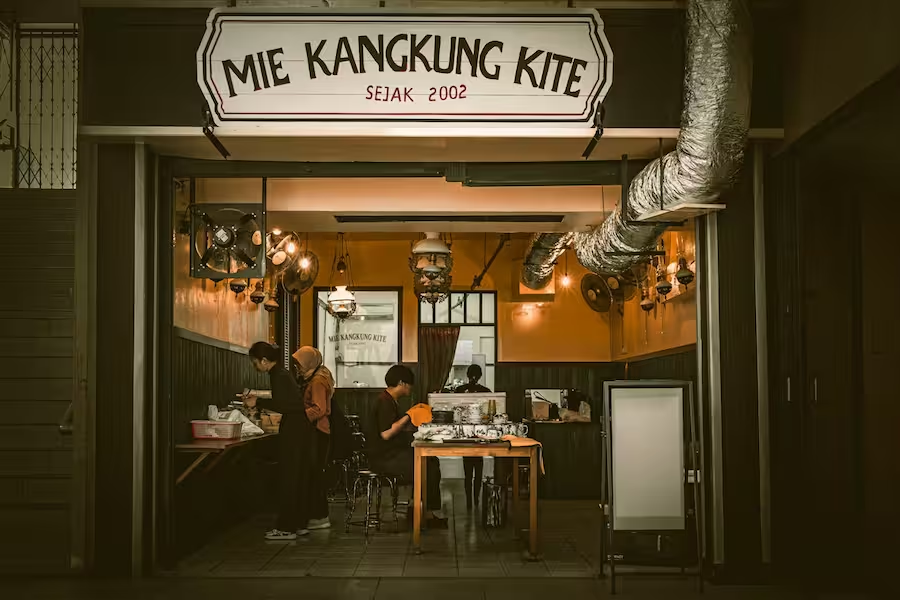
One of the strangest things about Bali is how quickly you can switch from “budget backpacker mode” to “wait… why did breakfast cost $18?” 😅
And the difference usually comes down to one thing:
Warungs vs cafés.
These are basically two completely different food worlds existing on the same island.
A warung is usually:
No fancy branding.
No minimalist interior.
No smoothie bowls with edible flowers 🌸
Just good food.
And this is where Bali still feels genuinely cheap.
At many warungs, you can still:
A lot of experienced travelers eventually realize:
the best meals in Bali often come from places that barely look like restaurants.
If you’re curious whether Balinese food is actually good or just hyped online, I shared my honest experience in this Bali food review where I go deeper into flavors, warungs, and café culture.
Then there’s café culture.
Especially in places like Canggu, Bali cafés have become almost their own ecosystem.
You’re not just paying for food anymore.
You’re paying for:
And honestly… cafés in Bali are often really good. The coffee quality is surprisingly high. The interiors are beautiful. The food presentation feels almost designed for Instagram.
But this is also where budgets quietly collapse 😄
Because one coffee becomes:
And suddenly Bali doesn’t feel that cheap anymore.
What makes Bali confusing is that both realities exist at the same time.
You can:
On the same street sometimes 😅
That’s why people online argue so much about whether Bali is expensive.
They’re usually talking about completely different lifestyles.
Honestly, the best Bali experience is probably somewhere in the middle.
A lot of long-term travelers naturally end up doing this:
That balance usually gives people:
The difference between local warungs and trendy cafés is one of the biggest reasons Bali food prices feel inconsistent in 2026. Warungs offer cheap, authentic Balinese food at very affordable prices, while cafés in places like Canggu focus more on lifestyle, aesthetics, and international cuisine. Eating at local restaurants in Bali can be extremely budget-friendly, but daily café culture can quickly increase travel expenses. Overall, Bali offers both low-cost local dining and premium tourist food experiences.

Honestly, this is where Bali gets interesting.
Because some food in Bali feels incredibly overpriced for what it is… But some meals feel like ridiculous value even when they’re not that cheap. A lot of travelers eventually realize: the best food experiences in Bali are usually not the most expensive ones.
.avif)
At this point, nasi goreng is almost impossible to avoid in Bali 😄
And honestly?
That’s probably a good thing.
It’s:
A good nasi goreng from a local warung often feels more satisfying than expensive café food trying too hard to look aesthetic.
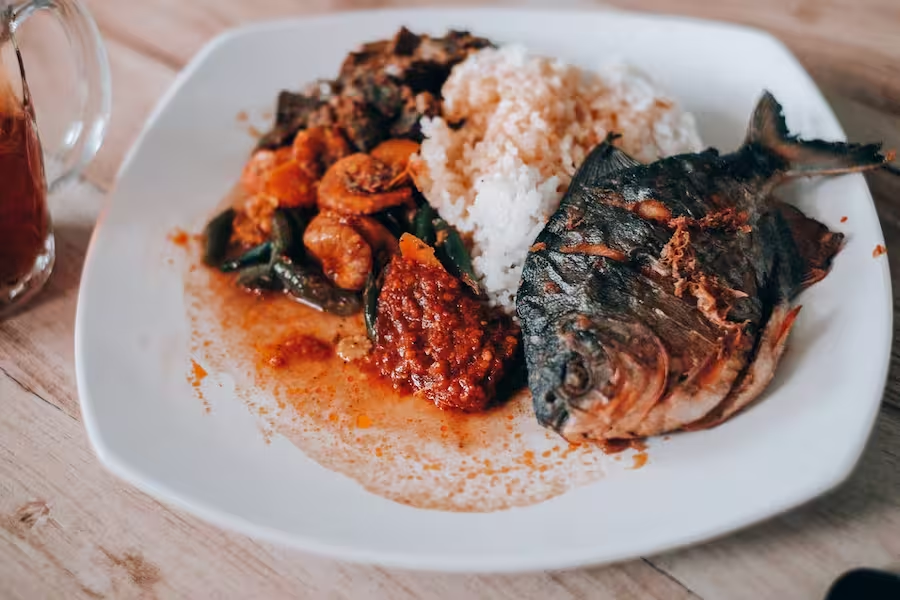
If you want one meal that explains Bali food culture well, this is probably it.
You usually get:
All on one plate.
And the best part is:
every place makes it differently.
It’s one of the few meals in Bali where people often say:
“This cost way less than it should have.”
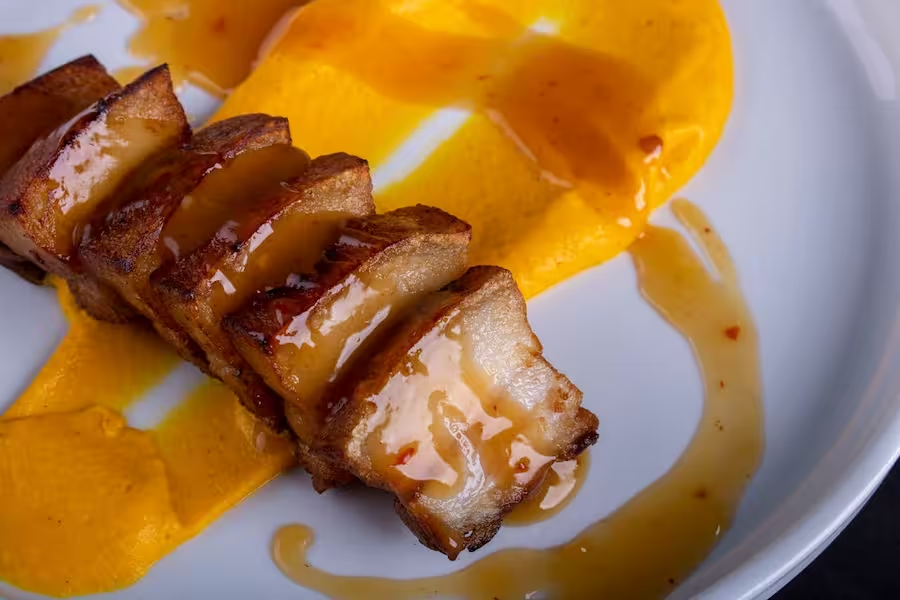
This is one of the most iconic dishes in Bali.
Spiced roast pork with crispy skin, rice, sambal, and side dishes.
Some travelers become obsessed with it immediately.
Others think it’s overrated.
But honestly, if you eat pork, it’s probably one of those “you should experience it once” meals while in Bali.
A lot of people eventually settle into a pattern like:
And honestly, that’s probably when Bali food starts feeling “worth it.”
Because the island works best when you experience both sides:
Some of the best food in Bali includes Nasi Goreng, Nasi Campur, and Babi Guling, which many travelers consider excellent value for money. Traditional Balinese dishes are often cheaper and more authentic than trendy café meals in tourist areas. While café culture in Bali can feel overpriced at times, many visitors still enjoy the atmosphere and lifestyle experience. Overall, the best food experiences in Bali usually come from balancing local cuisine with occasional modern cafés.
If you’re planning to eat local food in Bali but feel a bit nervous about it, you might want to read my full explanation of Bali Belly and what actually causes it.
This is where the conversation gets a little confusing online 😄
Because technically, yes — Bali is still cheap compared to many Western countries. But compared to the rest of Southeast Asia?
Not always.
And honestly, that surprises a lot of people.
Compared to places like New York City or Los Angeles, eating out in Bali still feels significantly cheaper.
Here’s a simple real-world comparison:
So yes — even a “expensive” café brunch in Bali often costs the same as just coffee + tip in the US. That’s why many American travelers arrive in Bali feeling like food is incredibly affordable.
At least initially 😅
Compared to Europe or Australia, Bali still feels cheaper overall — but the gap is smaller than people expect.
Typical comparison:
So: local food = still extremely cheap, café culture = closer to Western pricing.
Especially in places like Canggu, prices can feel surprisingly similar to Australian café lifestyle.
This is where Bali starts losing the “cheap” competition a bit.
Approximate comparison:
So while Bali is still affordable, it’s often:
Especially in tourist-heavy areas like: Bangkok, Chiang Mai, Ho Chi Minh City.
That’s why many long-term travelers describe Bali as:
“Affordable luxury rather than budget travel.”
The honest answer is:
You can absolutely eat cheaply in Bali — and many people do.
But Bali also makes spending money feel very easy 🌴😅
Food in Bali is still significantly cheaper than in the United States, Europe, and Australia, with local meals typically costing $2–$5 compared to $10–$30 in Western countries. However, compared to Southeast Asian destinations like Thailand and Vietnam, Bali can feel more expensive, especially in café-heavy areas such as Canggu. While traditional Balinese food remains very affordable, modern brunch culture and tourism-driven pricing increase overall costs.

✅ Eating out in Bali can be extremely cheap if you focus on local warungs and traditional Indonesian meals
✅ Bali food prices are still significantly lower than in the US, Europe, and Australia for most travelers
✅ Local dishes like Nasi Goreng and Nasi Campur offer strong value for money
✅ The café scene in Bali adds modern variety with smoothie bowls, specialty coffee, and international brunch culture
✅ Bali offers a rare mix of ultra-budget local food and high-end lifestyle dining in the same areas
✅ Travelers can easily adjust their food budget depending on whether they eat local or stick to cafés
✅ Overall, Bali food culture is diverse, flexible, and shaped heavily by lifestyle choices rather than fixed pricing
🔶 Eating out in tourist hotspots like Canggu and Seminyak can feel surprisingly expensive compared to expectations
🔶 Café culture and beach clubs often inflate daily food costs significantly
🔶 Bali is no longer as “ultra-cheap” as many older travel blogs still suggest
We’ve created the ultimate Bali guide for first-time visitors — based on real experience, not guesswork.