
Do Australians need a visa for Bali in 2026? The surprising part is that many Australians think Bali is completely visa-free, only to discover additional entry requirements while planning their trip. If you've spent any time browsing travel forums or Reddit discussions, you've probably noticed that people often disagree about how long you can stay, what fees you need to pay, and whether a Visa on Arrival is enough.
Generally visiting Bali is still relatively straightforward for Australians, but there are a few important details that can save you time, money, and unnecessary stress. Before you book your flights, it's worth understanding exactly how Bali's visa rules work in 2026.
Australians do need a visa to enter Bali in 2026, but the system is designed to be simple and tourist-friendly rather than complicated. Most travelers choose between a Visa on Arrival (VOA) or an Electronic Visa on Arrival (e-VOA), both of which allow an initial stay of 30 days.
If you plan your trip properly, this 30-day stay can usually be extended once, giving you a total stay of up to 60 days without needing to leave Indonesia. However, staying longer than 60 days requires applying for a different visa type (such as a long-stay tourist visa) before arriving.
The main things travelers should understand before flying to Bali are:
Yes, Australians do need a visa or approved entry authorization to enter Bali in 2026, but the process is generally simple and designed for tourism rather than bureaucracy-heavy approval systems.
What often confuses travelers is that “visa required” does not mean you need to visit an embassy or go through a long application process. For most Australians, Bali offers straightforward entry options that can be arranged either before departure or on arrival.
The most common choice is the Visa on Arrival (VOA) or its online version, the Electronic Visa on Arrival (e-VOA). These are essentially the same in terms of validity and conditions, but differ in how you apply.
Here’s how they work in practice:
Both of these options typically allow Australians to stay in Bali for 30 days initially. They are also designed with flexibility in mind, as they can usually be extended once while inside Indonesia.
There's also a detailed article about how long Australians can stay in Bali in 2026.

The idea that Australians are limited to only 30 days in Bali is one of the most common misconceptions I see. In reality, 30 days is just the initial entry period for most tourist visas, not the maximum possible stay.
For Australians who want to stay longer, there are several legal options depending on how much time you plan to spend in Indonesia and how much effort you want to put into the visa process.
The most common and simple method is using a Visa on Arrival (VOA) or Electronic Visa on Arrival (e-VOA). Both options typically start with a 30-day stay, but the key advantage is that they can usually be extended once for an additional 30 days. This means most tourists can stay in Bali for up to 60 days total without leaving the country.
Beyond these standard tourist options, there are additional visa types for travelers who plan longer or more specific stays:
This option is different because:
In practice, most Australian tourists never need more than the VOA or e-VOA with an extension. However, for those staying longer, planning ahead becomes essential because switching from a short-term visa to a long-stay visa inside the country is not always straightforward.
I often see travelers on Reddit say that Bali feels “limitless” once you understand the system — but that feeling only comes after realizing that every extension or longer stay must be aligned with visa rules, not improvised during the trip.
So the real answer is: yes, Australians can stay longer than 30 days in Bali, but only if they choose the correct visa strategy in advance or extend properly during their stay.
When people ask me how much it actually costs to go to Bali in 2026, I usually say this: the visa itself is not expensive, but the total entry cost is slightly more than most first-time Australians expect.
The most common option for Australians is the Visa on Arrival (VOA) or Electronic Visa on Arrival (e-VOA). In 2026, the official government fee is around IDR 500,000, which usually converts to approximately:
This fee covers a 30-day stay in Bali, and in most cases it can be extended once for another 30 days at a similar cost. So if you plan a full 60-day stay, the visa cost typically doubles.
From what I’ve seen in recent traveler reports and official updates, many Australians prefer the e-VOA option, because it allows you to pay in advance and skip some airport processing time. However, the price remains essentially the same as VOA — you're just paying for convenience.
On top of the visa fee, every international visitor must also pay the Bali Tourist Levy, which is a separate charge.
In 2026, this fee is approximately:
It is not included in your visa payment, which is where a lot of confusion happens. I’ve seen many travelers assume they already paid everything when they completed their visa application, only to find out the levy is a separate step.
This fee is usually paid online before arrival through the official Bali tourism system, although it can sometimes be paid at the airport as well. Most experienced travelers recommend paying it in advance to avoid queues.
If you plan to stay in Bali longer than 30 days, you’ll need to extend your Visa on Arrival (VOA) or e-VOA. The official government fee in 2026 is typically around:
This extension gives you an additional 30 days, bringing your total stay to 60 days in Indonesia.
This is where costs can vary significantly.
While the official fee remains fixed, agent services often add their own commission. Depending on convenience, location, and urgency, the total price you pay can sometimes become:
From what I’ve seen in traveler communities, many people choose agents simply to avoid multiple trips to immigration offices. It’s convenient, but it comes at a price — and not always a small one.
Beyond those official costs, there are a few additional expenses that experienced travelers often budget for:
💰 Travel insurance, which many seasoned Bali visitors consider essential.
💰 Transportation to immigration offices if an extension is required.
One interesting pattern I've noticed in travel communities is that experienced Bali visitors rarely complain about the fees themselves. Instead, most frustrations come from unexpected costs that weren't included in the original holiday budget.
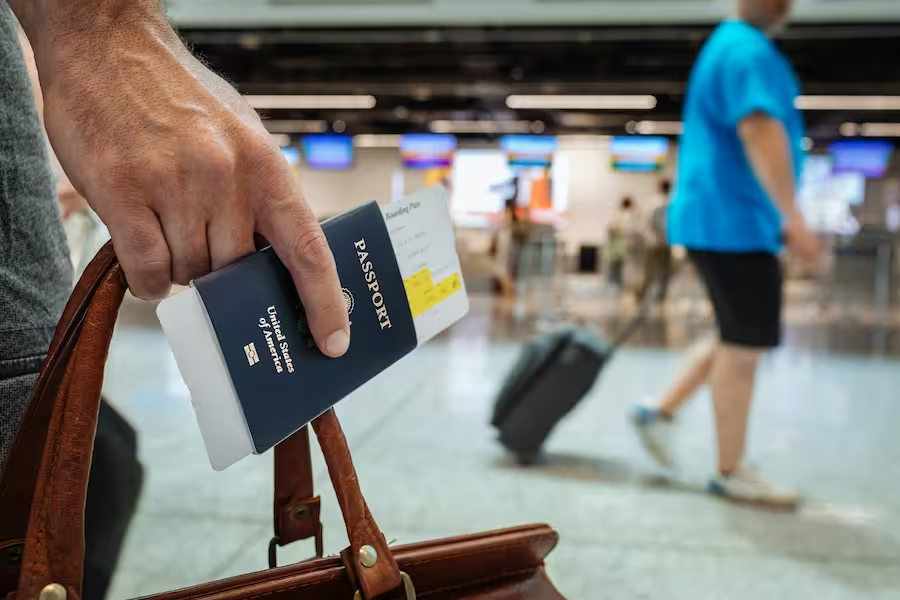
Applying for a Bali visa in 2026 is actually much simpler than most first-time travelers expect. When I look at how Australians usually go through this process, it really comes down to two main paths: applying online before you fly (e-VOA) or getting your visa directly at the airport (VOA). Both lead to the same result — a 30-day tourist stay — but the experience is slightly different.
What I’ve noticed from frequent travelers is that people who prepare in advance usually have a much smoother arrival, especially during busy travel seasons.
This is the option most experienced travelers recommend, mainly because it removes stress on arrival.
The process usually looks like this:
Once approved, your visa is electronically linked to your passport. You don’t need to print anything in most cases, but many travelers still keep a digital copy just in case.
When you arrive in Bali, the process is straightforward:
From what travelers often share, the biggest advantage here is avoiding long queues at the Visa on Arrival counter, especially during peak hours when multiple international flights land at the same time.
This is the traditional method and still widely used.
Here’s how it works step by step:
After immigration, you may also be asked to show proof of the Bali Tourist Levy payment, so it’s good to have that completed in advance.
This option is very simple, but the main downside is waiting time. If several flights arrive together, queues at the VOA counter can take anywhere from a few minutes to over an hour depending on the season.
Regardless of which option you choose, immigration officers may ask for:
One thing I always recommend is not treating these as optional. Even if they’re not always checked, having everything ready makes the process much smoother if you are asked.
A visa is just as important as money when traveling to Bali. Find out how expensive Bali is in 2026.

Even though the Bali visa process is relatively simple, I keep seeing Australians run into the same avoidable problems. Most of them aren’t serious mistakes on paper, but they can easily lead to stress, extra costs, or even fines.
If you're confident you're heading to Bali, don't forget to download the most essential mobile apps for Bali.
Here are the most common ones:
From what I’ve seen in travel discussions, most of these issues come down to one thing: people assume Bali entry rules are still the same as years ago, instead of checking current requirements.

✅ Australians need a visa or entry authorization to visit Bali in 2026, most commonly Visa on Arrival (VOA) or e-VOA.
✅ The standard initial stay is 30 days, with the option to extend once for a total of 60 days.
✅ Bali remains one of the easiest international destinations for Australians in terms of entry requirements.
✅ The visa process is simple and can usually be completed at the airport or online before arrival.
✅ Many travelers prefer e-VOA because it reduces airport processing time and uncertainty.
🔶 Overstaying a visa can result in daily fines and potential immigration issues.
🔶 Travelers sometimes underestimate additional costs like the Bali Tourist Levy and extension fees.
We’ve created the ultimate Bali guide for first-time visitors — based on real experience, not guesswork.