Where should first timers stay in Bali? Listen, if I could answer that in one sentence, this article wouldn't need to exist 😄
One of the biggest mistakes first-time visitors make is assuming Bali is a small island where everything is close together. Then they arrive and realize that staying in the wrong area can mean spending hours in traffic, missing the experiences they imagined, and wondering why their Bali trip feels different from what they saw online.
The truth is that Bali offers several completely different lifestyles, from beach clubs and cafés to rice terraces, luxury resorts, and surf towns. After reading countless traveler discussions online, I've noticed that people who choose the right area often fall in love with Bali, while those who choose the wrong one spend their vacation wishing they had booked somewhere else.
Before you book a hotel, villa, or resort, it's worth understanding how different Bali's main areas really are.
If you're visiting Bali for the first time and want the safest overall recommendation, Seminyak is usually the best place to stay. It offers a good balance of beaches, restaurants, cafés, shopping, nightlife, day-trip access, and accommodation options without feeling too overwhelming.
That said, the "best" area depends on what kind of Bali experience you're looking for.
A pattern I keep noticing in traveler reviews is that people who stay in only one area often feel like they missed part of Bali. The island is surprisingly diverse, and each region offers a completely different atmosphere.
If your trip is only 5–7 days, choosing the right base becomes even more important because Bali traffic can eat up more vacation time than many first-time visitors expect.
Before my first trip to Bali, I made the same mistake many travelers make.
I looked at the map.
Everything seemed close together.
A beach here. A temple there. A rice terrace somewhere in the middle.
Easy, right?
Not exactly 😄
One of the first things people discover after landing in Bali is that distance and travel time are two completely different things.
A journey that looks like 15 miles (25 km) on Google Maps can easily take an hour or two depending on traffic.
That's why choosing the right area isn't just about finding a nice hotel. It's about deciding what your daily Bali experience will actually look like.
This is probably the most important thing first-time visitors should understand.
Each area attracts a completely different type of traveler.
Seminyak feels like:
Canggu feels like:
Ubud feels like:
Uluwatu feels like:
Nusa Dua feels like:
And honestly, that's why people often have completely different opinions about Bali online.
Sometimes they're not talking about the same Bali at all.

One Reddit comment I remember reading summed it up perfectly:
"The area you stay in matters more than the hotel you book."
And honestly, I think there's a lot of truth in that.
Let's say you stay in Ubud because the hotel looks beautiful.
Sounds great.
But if your dream vacation includes:
...you may end up spending hours in transport every day.
The opposite happens too.
Some travelers stay near the beach and later realize they wanted:
That's why selecting the right base is often more important than choosing the perfect accommodation.
Given the above, it will be useful for you to know how tourists get around Bali.
Many people try to see everything.
And Bali makes that temptation very strong.
But if your trip is only:
Trying to stay everywhere often creates unnecessary stress.
A common pattern I see online is:
Travelers who choose one or two areas usually enjoy Bali more than travelers who constantly change hotels.
Instead of trying to see every corner of the island, it's often better to choose an area that matches your priorities and explore from there.
Bali feels less like a single destination and more like several different travel experiences combined into one island.

Now that we understand why choosing the right area matters, let's look at a practical comparison between Seminyak, Canggu, Ubud, Uluwatu, and Nusa Dua for first-time visitors. I’ve broken it down by budget, hotels, food, and vibe, so you can see how each area stacks up for the same type of experience.

Popular with first-timers who want a mix of beach, nightlife, and shopping. Budget hotels start around $25–$40/night for a simple guesthouse, mid-range boutique hotels are $70–$150, and luxury villas can reach $300+/night. Food ranges from $2–$5 for a local warung meal to $15–$30 at a café or beach club. The area is lively, walkable in zones, but traffic can get heavy around sunset.
Seminyak is a popular destination, we have a detailed comparison of Seminyak and Ubud.

Trendy, ideal for digital nomads and younger travelers. Budget stays are around $20–$35/night, mid-range $60–$120, and private villas $200–$400+. Food is slightly more expensive than Seminyak: $3–$6 for warung meals, $10–$20 at cafés. Expect more cafés with Instagram-worthy designs and coworking-friendly spots. Streets can feel crowded, especially around main roads.
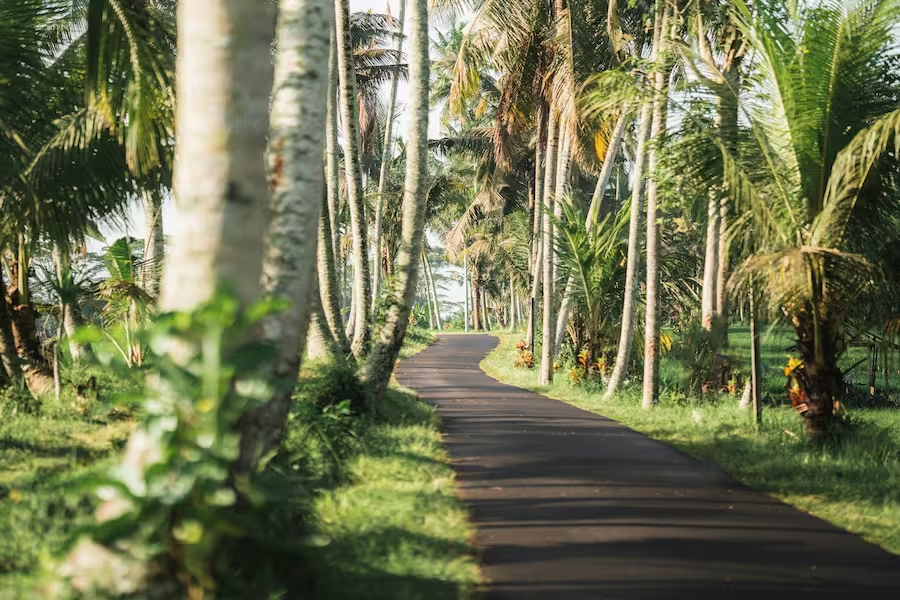
Perfect for culture, rice terraces, and wellness. Budget guesthouses start at $15–$30/night, mid-range hotels $50–$100, and luxury villas $150–$300+. Meals at local warungs are $2–$5, cafés $5–$15. The vibe is slower, peaceful, and nature-driven, but transport can take longer due to winding roads and rural terrain.
Ubud is known for its serene atmosphere and natural solitude and Ubud is often compared to other areas of Bali, for example Kuta.
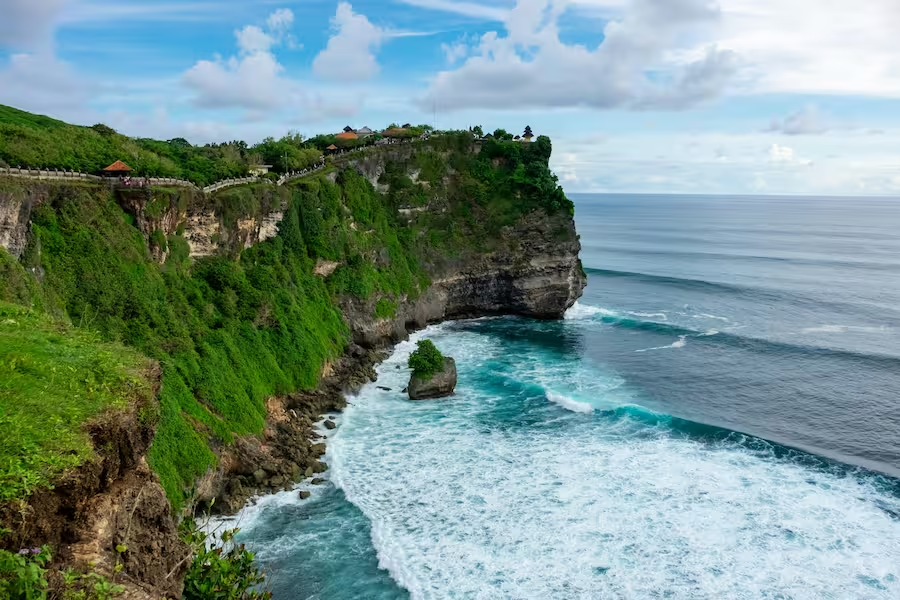
Clifftop luxury and surfing vibes. Budget stays $20–$35/night (smaller guesthouses), mid-range villas $80–$180, luxury clifftop villas $250–$600+. Food is $3–$7 at local warungs, $10–$25 at beachside restaurants. The area is quieter and more remote, so a scooter is almost mandatory. Perfect for sunset views and surf trips, less so for nightlife.
Uluwatu is one of the most picturesque areas of Bali, and also is among the top most beautiful areas to stay in Bali.

Family-friendly and resort-heavy. Budget hotels are rare, starting around $40–$60/night, mid-range $100–$200, luxury resorts $300–$800+. Meals are pricier than other areas: $5–$10 at local spots, $15–$40 at hotel restaurants. This area is clean, organized, and stress-free, ideal for those who want convenience over adventure.

One thing I've noticed after reading hundreds of traveler reviews is that people rarely regret Bali itself.
What they regret is choosing the wrong area.
The good news is that once you identify what kind of traveler you are, the decision becomes much easier.
If you're visiting Bali for the first time and don't have a very specific goal, Seminyak is usually the safest recommendation.
Why?
Because it gives you a little bit of everything:
You can explore much of southern Bali without feeling isolated or overwhelmed.
That's why if a friend asked me where to stay in Bali for the first time, Seminyak would probably be my default answer.
Canggu has become one of Bali's most talked-about destinations.
And honestly, it's easy to see why.
You'll find:
A lot of people arrive in Canggu for a week and end up staying for months.
The downside?
Traffic has become one of the biggest complaints.
Some travelers also feel that Canggu is becoming less "Bali" and more of an international remote-work hub.
Still, if meeting people is a priority, Canggu is hard to beat.
If your dream Bali trip includes:
...Ubud is probably what you're looking for.
This is the Bali many people imagine before they arrive.
The pace is slower.
The scenery is greener.
And the focus shifts from beaches to culture and nature.
One thing to remember though.
Ubud is not a beach destination.
Many first-time visitors forget that and are surprised by how far the ocean feels.
If scenery matters most, Uluwatu might be the most beautiful area on this list.
Think:
The sunsets here are some of the best you'll find anywhere in Bali.
The trade-off is convenience.
You'll often need:
Compared to Seminyak or Canggu, things are more spread out.
Nusa Dua feels different from most of Bali.
It's cleaner.
More organized.
More resort-focused.
That's exactly why many families love it.
You'll find:
Some travelers find it too controlled or less authentic.
Others appreciate the simplicity.
If your goal is relaxation rather than exploration, Nusa Dua makes a strong case.
If I had to match each traveler type to one area:
And honestly, those recommendations cover the majority of travelers visiting Bali for the first time.

After comparing all the major areas, you might be hoping for a simple answer.
And honestly, I think there are two strong answers.
If you're visiting Bali for the first time, Seminyak and Uluwatu are usually the safest recommendations.
They offer very different experiences, but both showcase some of the best sides of Bali.
Seminyak is ideal if you want convenience, variety, and easy access to restaurants, cafés, shopping, nightlife, and day trips.
Uluwatu is ideal if your vision of Bali includes dramatic cliffs, turquoise water, beautiful beaches, luxury villas, and unforgettable sunsets.
The choice really comes down to what kind of first Bali experience you're looking for.
If you only have one week in Bali and want to experience as much as possible, Seminyak is probably the smartest choice.
You can easily visit:
while keeping a comfortable and central base.
Seminyak gives first-time visitors a little bit of everything.
That's why it's often considered the safest recommendation for a first Bali trip.
If Bali's famous scenery is what attracted you in the first place, Uluwatu deserves serious consideration.
For many travelers, this is the Bali they've been dreaming about.
You'll find:
The atmosphere feels calmer and less crowded than Seminyak or Canggu.
In many online travel discussions, Uluwatu is often described as the area that feels most like a tropical paradise.
The trade-off is convenience.
You'll spend more time using taxis or scooters, and there are fewer dining and shopping options compared to Seminyak.
If beaches aren't important to you, Ubud becomes one of the strongest options on the island.
Many travelers leave Bali saying Ubud was their favorite part of the trip.
Especially people interested in:
Ubud offers a completely different side of Bali compared to the coastal areas.
The most common mistake first-time visitors make isn't choosing the wrong hotel.
It's choosing the wrong area.
A luxury villa in the wrong location can create a worse experience than a simple hotel in the right location.
Before booking, ask yourself:
Your answers will usually reveal the best area for your trip.
If a friend asked me where to stay in Bali for the first time, I'd probably say:
Choose Seminyak if you want the easiest, most balanced Bali experience.
Choose Uluwatu if beautiful beaches, ocean views, and sunsets are your top priority.
Choose Ubud if you want culture, nature, and a slower pace.
Choose Canggu if you're looking for cafés, social life, and digital nomad energy.
Choose Nusa Dua if your goal is a relaxing resort vacation.
For most first-time visitors, I would personally narrow the decision down to Seminyak or Uluwatu. One offers convenience and variety. The other offers some of the most spectacular scenery on the island.
And honestly, neither is a bad choice.

✅ Seminyak is the most balanced choice for first-time visitors, offering beaches, cafés, restaurants, nightlife, and easy access to other parts of southern Bali
✅ Uluwatu is the best option for travelers who prioritize dramatic cliffs, ocean views, surfing, and a more scenic, relaxed atmosphere
✅ Ubud is ideal for culture, rice terraces, temples, wellness retreats, and a slower, more nature-focused experience
✅ Canggu is best for social travelers, digital nomads, café culture, and a younger international crowd
✅ Nusa Dua is the most structured and resort-heavy area, perfect for families and stress-free luxury vacations
🔶 Seminyak and Uluwatu are the two most recommended “safe picks” for a first trip depending on whether you prefer convenience or scenery
🔶 Many travelers regret trying to stay in too many areas instead of choosing one or two bases
🔶 First-time visitors often underestimate how different each Bali region feels in terms of lifestyle and atmosphere
We’ve created the ultimate Bali guide for first-time visitors — based on real experience, not guesswork.